What we
learn while
scanning.
Validation playbooks, demand-signal teardowns, and competitor read-throughs — pulled from the same 50+ sources that feed every IdeaScanner report.
Market Sizing
View guide →How to size a market without guessing — TAM, SAM and SOM, market-opportunity math, and the inputs that make the numbers defensible.

TAM vs SAM vs SOM, Explained Clearly
TAM vs SAM vs SOM explained for founders who need real market sizing. Learn the difference, avoid bad assumptions, and size opportunities with evidence.
Read note →
Market Opportunity Analysis That Cuts Risk
Market opportunity analysis shows if demand, competition, pricing, and timing support a real business case before you build or expand.
Read note →
How to Estimate Market Size Without Guessing
Learn how to estimate market size using TAM, SAM, and SOM, plus live demand, pricing, and competitor data to avoid costly false positives.
Read note →
TAM SAM SOM Analysis That Actually Holds Up
A practical tam sam som analysis for founders who need real market sizing, sharper assumptions, and evidence strong enough for a true go/no-go.
Read note →Competitor Analysis
View guide →Mapping the competitive field — competitor traffic teardowns, landscape research, and market-saturation reads that show where the white space is.

Competitive Landscape Research That Holds Up
Competitive landscape research shows where rivals win, how markets shift, and whether an idea deserves capital before you build the wrong thing.
Read note →
How to Analyze Competitor Traffic
Learn how to analyze competitor traffic using channels, keywords, intent, and conversion clues so you can judge demand before building.
Read note →
How to Evaluate Market Saturation Fast
Learn how to evaluate market saturation with real demand, competitor density, pricing, and channel data so you can make a sharper go or no-go call.
Read note →
Best Competitor Traffic Analysis Tool?
Choosing a competitor traffic analysis tool? Learn what the data really shows, where it fails, and how founders should use it to make better bets.
Read note →Product-Market Fit
View guide →Signals that you've actually hit product-market fit — how to validate PMF and tell real traction from noise.

Demand Validation
View guide →Reading real demand before you build — search-demand analysis, niche and product-demand validation, and demand-analysis examples founders can copy.

How to Validate Product Demand Fast
Learn how to validate product demand with real market signals, competitor data, pricing, and customer evidence before you build or invest.
Read note →
How to Validate Startup Demand the Right Way
Learn how to validate startup demand with real market signals, customer evidence, and competitor data before you waste time building.
Read note →
How to Validate Niche Demand Fast
Learn how to validate niche demand with real market signals, competitor data, pricing proof, and customer evidence before you build.
Read note →
What Is Search Demand, Really?
What is search demand? Learn how to measure real interest, spot false signals, and use search data to validate markets before you build.
Read note →
Search Demand Analysis Guide for Founders
A search demand analysis guide for founders who need real market signals, not guesses. Learn how to size demand, spot noise, and make better bets.
Read note →
Demand Analysis Example for Founders
A demand analysis example for founders showing how to size demand, read weak signals, pressure-test assumptions, and make a smarter go/no-go call.
Read note →
How to Do Demand Analysis That Holds Up
Learn how to do demand analysis with real market signals, competitor data, pricing context, and customer evidence before you build.
Read note →
Search Demand Analysis That Actually Helps
Search demand analysis shows whether buyers are actively looking for your product, how demand shifts, and where false signals can waste time.
Read note →Idea Validation
View guide →The core playbook for pressure-testing a startup idea — validation frameworks, go/no-go decisions, AI vs traditional market research, and the tools that help.
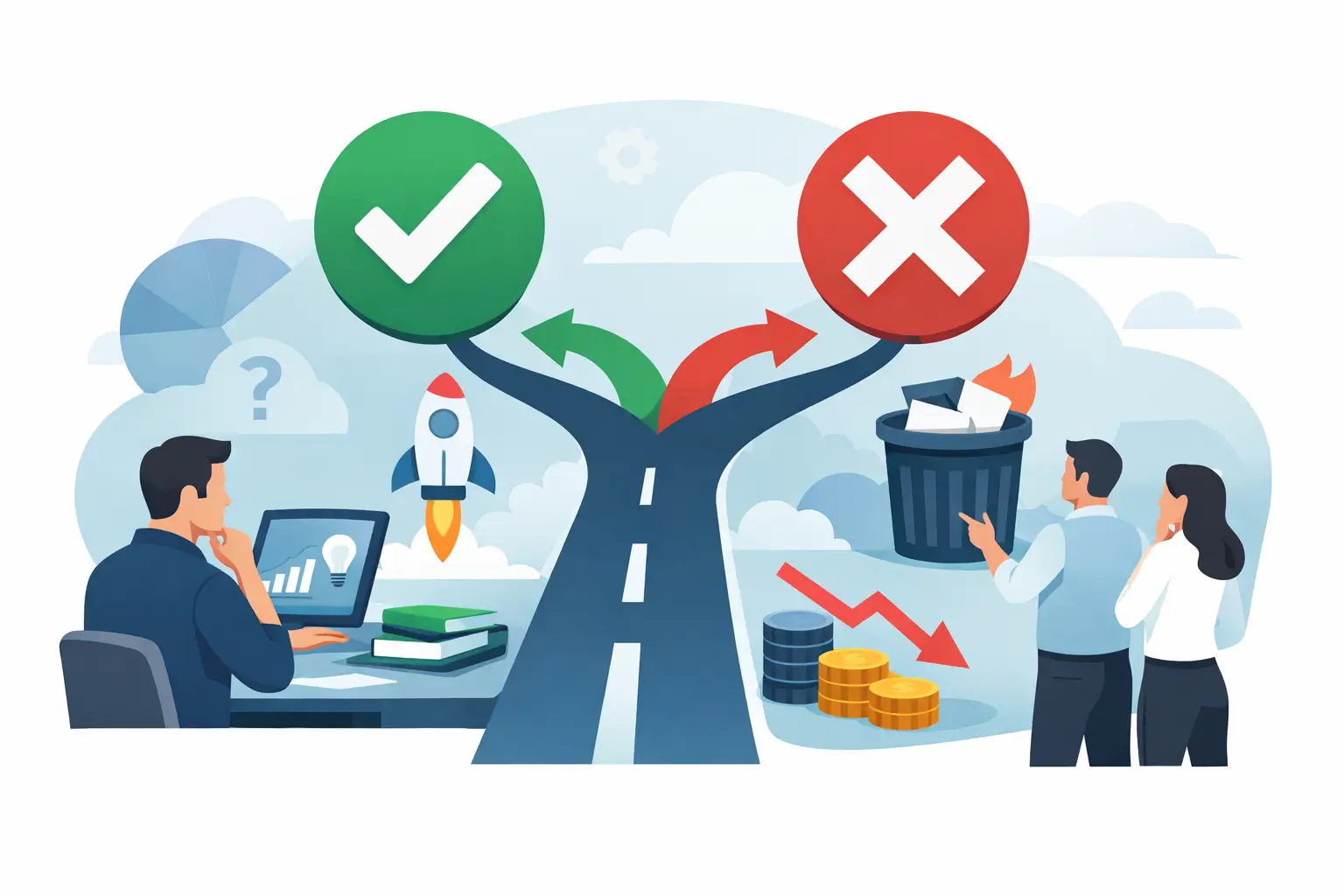
How the Go No Go Framework Cuts Bad Bets
Use a go no go framework to test demand, competition, pricing, and risk before you build. Make faster decisions with evidence, not guesses.
Read note →
Can AI Validate Business Ideas? Yes and No
Can AI validate business ideas? Yes, but only as a starting point. Real validation needs live market data, competitor signals, and demand proof.
Read note →
What Is Startup Validation, Really?
What is startup validation? Learn how founders test demand, competition, pricing, and risk before building - using evidence instead of guesses.
Read note →
Market Research vs AI: What Founders Miss
Market research vs AI is not a tie. Learn where AI helps, where it fails, and what founders need before betting time and capital on a market.
Read note →
7 Best Market Validation Methods
The best market validation methods help founders test demand, pricing, and competition before building. Here’s how to get evidence fast.
Read note →
AI Validation Versus Market Research
AI validation versus market research: learn which signals you can trust, where AI helps, and when real market data should drive go/no-go decisions.
Read note →
What Makes a Good Business Idea Validation Tool?
A business idea validation tool should test demand, competition, pricing, and risk with real data - not vague opinions or AI guesses.
Read note →
Startup Idea Validation Guide for Founders
A startup idea validation guide for founders who want evidence, not hype. Learn how to test demand, competition, pricing, and risk before building.
Read note →
10 Best Startup Validation Tools
Compare the best startup validation tools for demand, competition, pricing, and customer insight so you can make faster, evidence-based go/no-go calls.
Read note →
Go No Go Market Analysis That Holds Up
Go no go market analysis helps founders test demand, competition, pricing, and risk before building, entering a market, or burning budget.
Read note →
What Is Idea Validation, Really?
What is idea validation? Learn how founders test demand, competition, pricing, and risk before building - using evidence, not guesses.
Read note →
How to Validate Startup Idea Without Guessing
Learn how to validate startup idea with real market evidence - demand, competitors, pricing, and customer signals before you build.
Read note →
Business Idea Validation That Holds Up
Business idea validation should rely on demand, competition, pricing, and risk data - not guesses. Here's how to test ideas before you build.
Read note →
Startup Idea Validation Prompt That Helps
A startup idea validation prompt can sharpen your thinking, but prompts alone miss market proof. Here’s how to use one without fooling yourself.
Read note →
Startup Idea Validation AI: What Actually Works
Startup idea validation AI can speed research, but not all signals are real. Learn what to trust, what to test, and where AI gets validation wrong.
Read note →
A Startup Idea Validation Framework That Works
Use a startup idea validation framework to test demand, competition, pricing, and risk before you build and waste time on bad signals.
Read note →NEXT SCAN · IN YOUR INBOX
One field note. Every
Wednesday.
No drip funnels, ever.
The same playbook we run on every IdeaScanner report — written up plainly and sent the morning it goes live.